How to Increase Product Page Conversion Rate for Electronics
Why Smartphone Product Pages Struggle to Convert
For telecom operators, electronics retailers, and manufacturers, device e-commerce performance depends heavily on how effectively devices are presented online. Customers do not purchase, e.g., a phone without first evaluating its design, size, and physical characteristics in detail. Unlike many ecommerce categories, electronics are tactile products: in physical retail, shoppers naturally pick up devices, rotate them, and inspect elements such as thickness, camera layout, and finishes. These hands-on interactions allow customers to quickly build confidence in their choice.
Online, that interaction disappears. Most device pages still rely on static image galleries that show only a limited set of angles. Even when specifications are available, customers may struggle to visualize how it actually looks and feels. This gap between physical evaluation and digital presentation is a major reason many device pages underperform. Improving how electronics are displayed and understood digitally is, therefore, one of the most effective ways to increase product page conversion rate in device ecommerce.
This challenge makes product detail page (PDP) optimization particularly critical in smartphone retail. A high-performing PDP must do more than list features. It must help customers understand the physical product clearly enough to make a confident decision. When shoppers cannot easily interpret size, proportions, or design, they often open multiple tabs, compare repeatedly, or postpone purchase. Strengthening device understanding on the PDP is therefore central to efforts to improve product detail page conversion.
Customers evaluating smartphones online typically want to confirm several physical aspects before buying: overall dimensions, perceived thickness, camera bump size, frame shape, and material finish. In store, these judgments take seconds through direct handling. Online, they depend entirely on presentation quality. When customers cannot mentally reconstruct the device from product content, uncertainty remains high. Effective PDP optimization ecommerce strategies, therefore, focus on enabling clearer product perception and exploration.
Leading telecom and electronics retailers increasingly recognize that smartphone PDPs must function as digital evaluation environments rather than static information pages. Instead of presenting phones as static images, they provide richer product views that let shoppers examine devices more freely and from multiple perspectives. This deeper level of product understanding increases engagement and supports more confident decisions — both of which correlate strongly with higher conversion. Retailers that enhance how customers evaluate devices online consistently see measurable gains in increasing product page conversion rate initiatives.
Practical Ways to Improve Smartphone PDP Conversion
Retailers seeking to increase product page conversion rate typically focus on improving how customers evaluate devices online. The following approaches help strengthen product understanding and reduce purchase hesitation on smartphone PDPs.
1. Enable interactive device exploration with a 3D product viewer
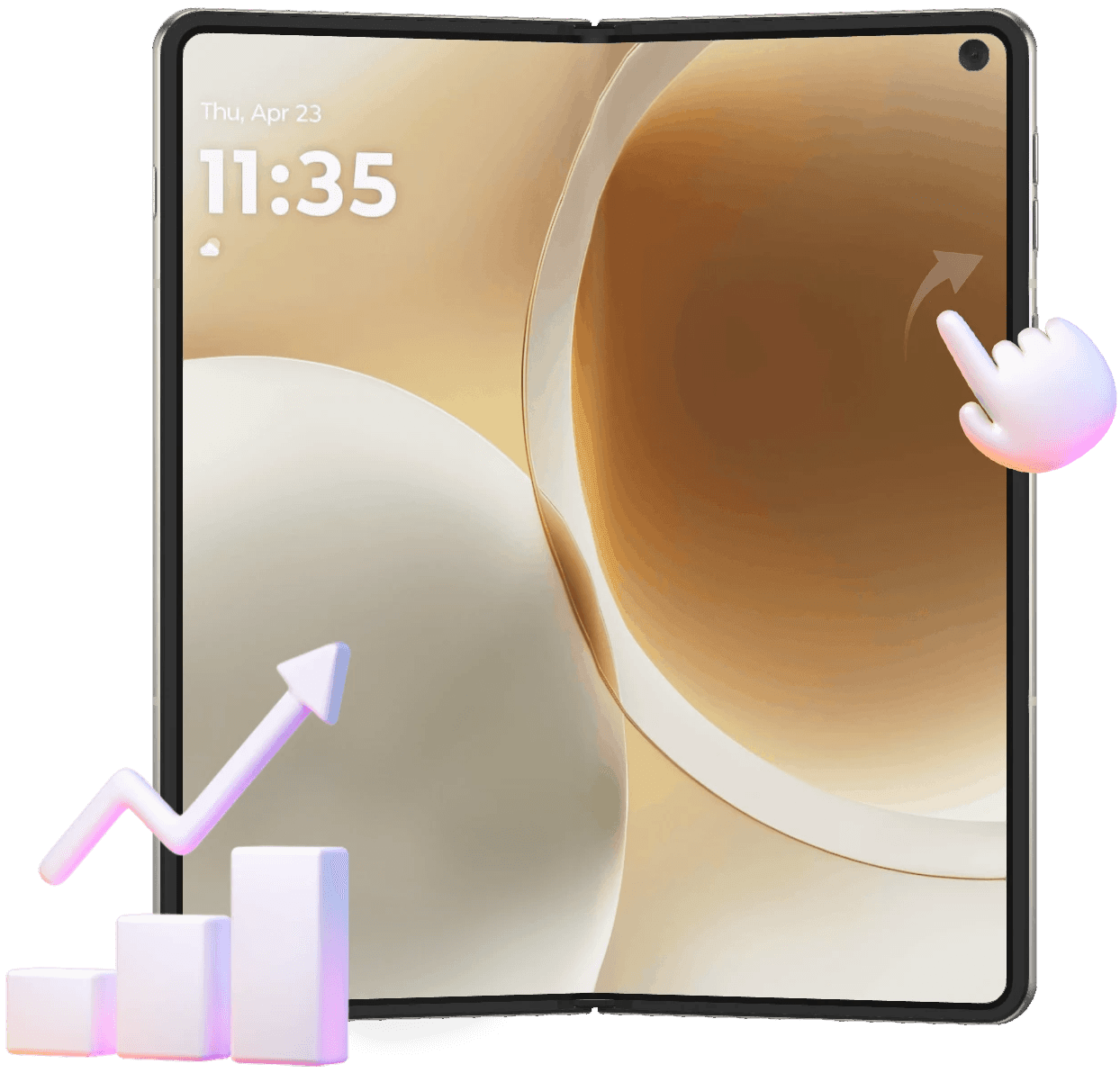
Static images limit how customers perceive smartphones. Shoppers want to inspect devices from multiple angles, understand thickness, and examine details such as camera modules and finishes. Implementing an interactive 3D product viewer allows customers to rotate phones freely and explore them visually, replicating key aspects of in-store handling. This deeper product understanding supports confidence and helps improve product detail page conversion.
2. Help customers compare smartphones visually and at scale
Choosing between similar devices is one of the biggest friction points in telecom ecommerce. Customers often struggle to judge differences in size, proportions, or screen format across models. Providing a phone size comparison experience on PDPs helps shoppers evaluate devices side by side. Clear comparison reduces uncertainty and supports faster decisions, contributing directly to efforts to increase product page conversion rate.
3. Improve perceived size and fit with device visualization tools
Many abandoned purchases and returns occur because customers cannot accurately interpret how large or small a phone will feel. Features such as true-to-scale phone display help shoppers understand real-world dimensions across different screens and formats. Enhancing perceived size accuracy is an effective PDP optimization ecommerce approach that reduces hesitation and helps improve product detail page conversion.
From Product Images to Product Understanding
As smartphone specifications converge across brands, visual evaluation and perceived design differences play a larger role in purchase decisions. Customers want to assess how a device looks and feels in realistic terms, not just read about it. Product detail page optimization in this category is therefore less about adding more technical information and more about improving how clearly the physical product is communicated.
For telecom operators and electronics retailers, PDP experience has become a strategic conversion lever. Pricing and promotions remain important, but product understanding often determines whether a customer feels confident enough to buy. Enhancing smartphone presentation so that customers can evaluate devices more accurately online directly supports efforts to increase product page conversion rate and strengthen ecommerce performance.
In smartphone ecommerce, successful PDP optimization ecommerce ultimately depends on reducing the gap between how customers evaluate devices in store and how they evaluate them online. When product pages enable clear, confident understanding of smartphones — especially their physical design — shoppers make decisions faster and with greater certainty. Improving how devices are perceived and understood on product pages remains one of the most reliable paths to sustained conversion growth page conversion.